
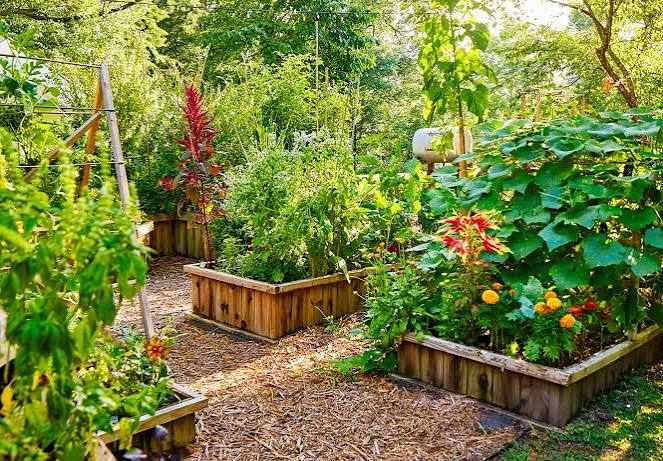

Why Raised Beds Work and Where They Don’t
Raised bed gardens have genuine advantages that explain their popularity: they warm faster in spring (extending the growing season), drain better than in-ground beds (preventing the waterlogging that causes root disease), allow precise control over soil quality regardless of what’s underneath, reduce weed pressure from ground-level weed seeds, and create a more ergonomic working height that reduces the physical demands of gardening.
They have genuine limitations that are less prominently discussed: they dry out faster than in-ground beds (requiring more frequent watering, particularly for tall beds in hot climates), they represent a significant upfront material investment, and the soil inside them eventually needs replenishment as it breaks down and settles over seasons.
Material Selection: The Trade-offs That Matter
Cedar and redwood are the most commonly recommended raised bed materials for their natural rot resistance — a properly built cedar bed can last 10–20 years without treatment. Untreated pine will rot within 3–7 years in most climates but is significantly less expensive. Composite lumber (made from recycled wood fiber and plastic) lasts indefinitely but is more expensive than wood and has a different aesthetic.
Pressure-treated lumber is a common choice with ongoing controversy about chemical leaching. Modern pressure-treated lumber uses copper-based preservatives (ACQ or CA) that are significantly less toxic than the arsenic-based CCA treatment used before 2004. Current research suggests the risk of chemical migration into food crops from modern PT lumber is very low, but if you prefer to avoid it, cedar or composite is the alternative.
Depth: How Deep Your Beds Actually Need to Be
A 6-inch deep raised bed is adequate for shallow-rooted crops like lettuce, herbs, and radishes. An 8-to-12-inch depth suits most vegetables including tomatoes, peppers, and cucumbers, whose roots extend 12–18 inches but access some native soil below the bed. An 18-inch depth is appropriate for root vegetables like carrots and parsnips that need extended vertical root run, and for beds placed on impermeable surfaces like decks or patios where there’s no native soil below.
Deeper beds hold more soil volume, which holds more moisture (an advantage in dry climates) and provides more root habitat. They also cost more to fill. For most vegetable growing applications on native soil, 10–12 inches of raised bed depth is the practical sweet spot.
The Filling Formula: What Goes Inside
The biggest raised bed mistake is filling with native soil from the yard — which is typically dense, often poorly draining, and exactly what the raised bed was designed to avoid. The standard professional raised bed filling formula is sometimes called ‘Mel’s Mix’ (after Square Foot Gardening author Mel Bartholomew): 1/3 compost, 1/3 peat moss or coco coir, and 1/3 coarse vermiculite. This produces a lightweight, well-draining, nutrient-rich growing medium that doesn’t compact over time.
For large raised beds, a modified version using less vermiculite (which is expensive in volume) and more high-quality compost and topsoil can be cost-effective. The key components: at least 50% compost (the primary nutrient source), adequate drainage material (perlite, coarse vermiculite, or sharp sand), and minimal or no native soil in the initial fill.
Annual Soil Replenishment: The Maintenance Nobody Mentions
Raised bed soil settles and breaks down over growing seasons as plant roots consume nutrients, organic matter decomposes, and the soil structure compresses. A raised bed that was 12 inches deep at installation may be 9–10 inches deep after two growing seasons, with noticeably reduced fertility.
Annual replenishment — adding 1–3 inches of fresh compost to the bed surface each spring and lightly working it into the top few inches — maintains soil volume, fertility, and structure without fully replacing the bed contents. This is the ongoing maintenance cost of raised bed gardening: the annual compost addition that keeps the system productive year after year.