

The Plumbing System Half of Homeowners Don’t Think About
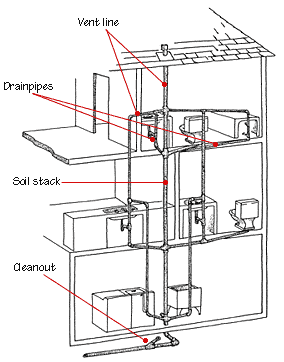
Most homeowners think of their home’s plumbing in terms of supply — the water that comes out of faucets. The drain-waste-vent (DWV) system — the network of pipes that removes waste water and gases from the home — is less visible and receives less attention until it fails. Understanding how the DWV system works explains why certain plumbing problems occur, what causes them, and what the warning signs are before failures become serious.
The DWV system has two interdependent functions: removing wastewater and solid waste from the home through drain and waste pipes, and providing ventilation that allows drains to flow freely and prevents sewer gases from entering the living space through vent pipes.
How the Vent System Prevents Drain Problems
Every drain in a home is connected to the vent system — a network of pipes that run up through the building and exit through the roof. These vent pipes serve a function that’s not obvious until you understand the hydraulics of drainage: water flowing down a drain creates negative pressure behind it that, without venting, would suck the water out of the P-trap below the fixture. An empty P-trap allows sewer gases to enter the home through the drain opening.
A gurgling sound when a drain empties — the characteristic glug-glug of a slowly draining tub or sink — is typically a venting problem, not a clog. The water is draining slowly because it’s fighting against the negative pressure created by inadequate venting rather than against a physical obstruction. Clearing the vent pipe (which may be clogged with leaves, bird nests, or debris at the roof opening) often resolves gurgling drains that persist after the drain itself is cleared.
P-Traps: Why Every Fixture Has One and What Happens When They Fail
The P-trap — the curved pipe beneath every sink, shower, and tub — holds a water seal that blocks sewer gases from entering the living space through the drain opening. This water seal is continuously maintained by the plumbing code requirement that every fixture have one and by the design of the drain piping that keeps water in the trap.
P-traps fail in two ways: evaporation and mechanical failure. A P-trap in an infrequently used fixture (a guest bathroom sink, a laundry sink used rarely) can evaporate dry over weeks of non-use, eliminating the water seal and allowing sewer gas entry. The fix is simple — run water for 30 seconds to refill the trap. Mechanical failure (cracks, corrosion, failed slip-joint seals) causes leaks that typically appear as dripping or staining in the cabinet below the sink.
Drain Slope: The Critical Installation Specification
Horizontal drain pipes must be sloped to allow waste to flow without accumulating. The plumbing code standard is 1/4 inch of slope per foot of horizontal pipe run — enough to allow flow while avoiding the too-steep slope that causes liquid to outrun solids, leaving them deposited in the pipe. A drain pipe installed perfectly level doesn’t flow; a drain pipe installed too steeply separates liquid from solids.
Drain slope problems occur most often after renovation work that shifts pipe positions without rechecking slope throughout the run. A newly renovated bathroom with a slow-draining fixture despite a clear drain line often has a slope problem — the plumber either reduced slope or inadvertently created a belly (a low point where solids accumulate) in the drain run.
When to Suspect DWV Problems vs. Simple Clogs
Simple drain clogs are localized — one fixture drains slowly while others drain normally. DWV system problems create patterns across multiple fixtures. Multiple slow drains, gurgling sounds in one fixture when another is used, sewer smell in the home without an obvious source, or drain backup in lower fixtures when upper fixtures are used all point to the DWV system rather than individual drain lines.
A drain camera inspection (covered in earlier articles in this series) is the diagnostic tool for DWV problems that can’t be identified by symptom pattern analysis. For suspected vent problems specifically, a plumber can use a smoke machine to introduce smoke into the vent system — escaping smoke from any point other than the roof vent indicates a vent pipe leak or blockage that wouldn’t be visible on a drain camera.