
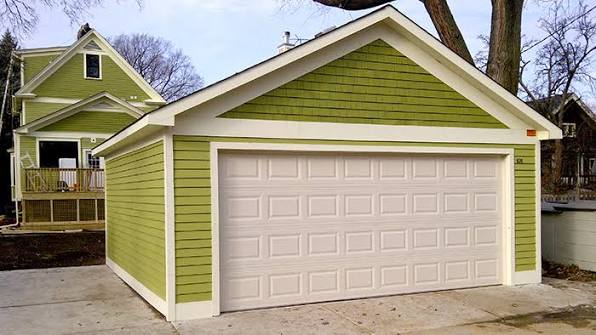

The Square Footage That Gets Undervalued
Real estate appraisers treat garage space differently from finished living space — typically at a lower per-square-foot value than conditioned interior space. But the garage’s contribution to a home’s appeal and sale price goes beyond raw square footage calculation. A well-maintained, functional garage signals to buyers that the entire property has been maintained with care; a neglected garage signals the opposite, and that signal affects perception of the whole home.
More concretely: in markets where off-street parking is scarce or where weather makes outdoor parking genuinely difficult, a functional garage commands a premium that shows up clearly in comparable sales analysis.
Garage Door: The Curb Appeal Variable With the Best ROI
The garage door is often the most visible element of a home’s front elevation — particularly in homes where the garage is front-facing. A garage door in poor condition (dented, faded, outdated design, damaged panels) has an immediate and disproportionate effect on curb appeal. Conversely, a new or well-maintained garage door in a design appropriate to the home’s architecture creates a positive first impression that affects buyer perception of the entire property.
Garage door replacement consistently appears among the top-returning home improvement projects in Remodeling Magazine’s annual Cost vs. Value report, recovering 90–100%+ of cost in many markets. Even short of replacement, painting a steel garage door (exterior-appropriate paint, with proper surface prep) or replacing damaged panels (panel-only replacement is possible on many door designs) significantly improves appearance at a fraction of full replacement cost.
Organization as a Selling Feature
A well-organized garage — clean floor, organized wall storage, room for the vehicles it’s designed to hold — communicates to buyers that the home has been lived in by organized, attentive owners. This perception transfers to the rest of the home during a showing. Buyers who see a chaotic garage full of accumulated clutter and blocked parking space tend to approach the rest of the home looking for problems; buyers who see a functional, organized garage tend to approach the rest of the home more charitably.
Before listing a home, declutter the garage completely, organize remaining items on shelves or in labeled bins, clean the floor, and clear the parking positions. This doesn’t require a professional organization system — it requires removing non-essential items and organizing what remains. The showing impression this creates is significantly more valuable than the time invested.
Lighting and Electrical: The Functional Signals
Buyers evaluating a garage notice functional quality as much as cosmetic condition. A garage with adequate lighting (more than one fluorescent tube for a two-car space), functional outlets in working positions, and a properly functioning opener with all safety features operating correctly signals that the space is ready to use rather than requiring immediate investment.
Conversely: an opener that hesitates or reverses unexpectedly, outlets that don’t work, lights that flicker or don’t illuminate the corners of the space, and a door that requires manual adjustment to open or close properly are the kinds of observations that buyers note and use in offer negotiations. Addressing these functional issues before listing costs less than the negotiated price reduction they’d otherwise generate.
The Attic Above the Garage: The Overlooked Storage Feature
Many attached garages have attic space above them that’s either unused or underutilized — accessible only through a small hatch, unlit, and unflootered. Converting this attic space into organized, floored, lit storage adds genuine usable storage to the home that buyers recognize as a value addition.
Pull-down attic stairs ($150–$400 in materials, a weekend installation) replace a small hatch with a proper stair that makes the space genuinely accessible. Adding OSB sheathing on the attic floor joists creates a floored storage area. A few light fixtures on a dedicated circuit complete the conversion. The total investment is modest; the storage volume gained and the showing impression it creates both contribute to the home’s appeal.