

Why Era Matters When Shopping for Vintage
Vintage furniture shopping without a basic knowledge of design eras is like wine shopping without knowing anything about grapes — you can still find something you like, but you can’t evaluate what you’re looking at, verify authenticity claims, or identify genuine quality pieces among the reproductions and misrepresented items that fill secondhand markets.
A working knowledge of the dominant furniture design movements of the 20th century lets you identify what you’re looking at, understand why it looks the way it does, and make informed purchase decisions at flea markets, estate sales, and online marketplaces where mislabeling is common.
Arts and Crafts / Mission Style (1890s–1920s)
Arts and Crafts furniture was a deliberate reaction against Victorian ornamentation — it emphasized honest construction, visible joinery, and the natural beauty of quartersawn oak. Mission furniture (the American variant) features straight lines, flat surfaces, and exposed mortise-and-tenon joinery. Original pieces are identified by hand-craftsmanship details: slight variations in the joinery, hand-planed surfaces with subtle tool marks, and the dark fumed-oak finish achieved through ammonia exposure rather than stain.
High-value makers include Stickley (the original Gustav Stickley company and its successors), Limbert, and Roycroft. Original pieces command significant prices at auction; quality reproductions from Stickley’s current production are widely available.
Mid-Century Modern (1945–1969)
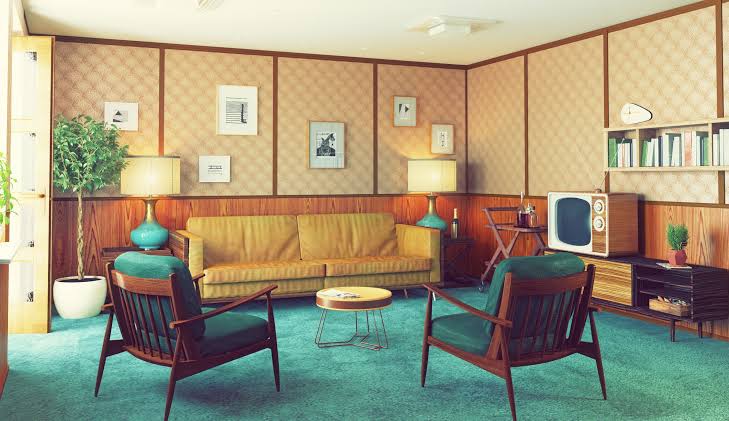
Mid-century modern remains the most collected and reproduced 20th-century furniture style — and the reproduction market is extensive enough that distinguishing originals from copies requires specific knowledge. Key designers: Charles and Ray Eames (molded plywood and fiberglass shell chairs), Hans Wegner (sculptural Danish wood chairs), Eero Saarinen (Tulip pedestal table and chairs), George Nelson (platform benches, ball clock, marshmallow sofa).
Original pieces from major designers carry period markings — labels, stamps, or tags identifying the manufacturer and date of production. Eames pieces produced by Herman Miller carry specific period labels; the label type and placement help date the piece. The market for unverified ‘MCM’ pieces is full of unlabeled originals, quality licensed reproductions, and low-quality knockoffs — price and provenance documentation are the most reliable authenticity signals.
Hollywood Regency (1930s–1950s, Revival 1960s–1970s)
Hollywood Regency brought glamour and maximalism to furniture — lacquered surfaces in bold colors, mirrored accents, gilt details, and luxurious upholstery in satin and velvet. The style references classical forms through a lens of theatrical luxury. Period pieces are characterized by high-quality lacquer work (no drips, runs, or brush marks visible), hand-applied gilt details, and quality upholstery fabrics.
Hollywood Regency has seen multiple revival moments (the 1970s produced a significant wave of revival pieces, and the 2010s brought another) making era identification relevant for pricing. A genuine 1940s piece and a quality 1970s revival piece may look similar but have very different values; construction quality and material analysis help differentiate them.
1970s Furniture: The Undervalued Era Starting to Rise
While the 1970s is associated with shag carpet and harvest gold appliances that are genuinely dated, the decade also produced sophisticated furniture that’s currently undervalued relative to MCM and is beginning to attract collector attention. Italian design of the 1970s — Cassina, B&B Italia, Arflex — produced sophisticated pieces in chrome, leather, and innovative forms that hold up aesthetically in contemporary interiors.
The practical opportunity: 1970s Italian design pieces in good condition can still be found at estate sales and online markets at prices significantly below comparable MCM pieces, while they share much of the same design sophistication. The window for this value opportunity typically closes as collector awareness increases — a pattern that’s played out repeatedly across design eras.